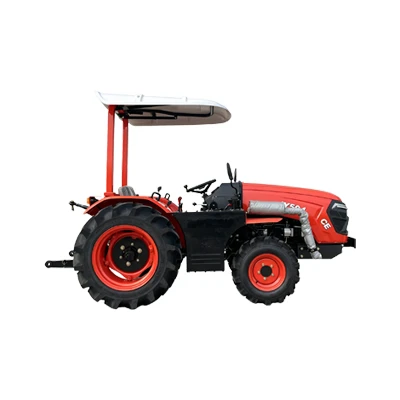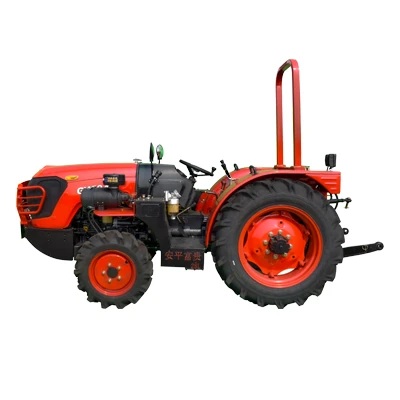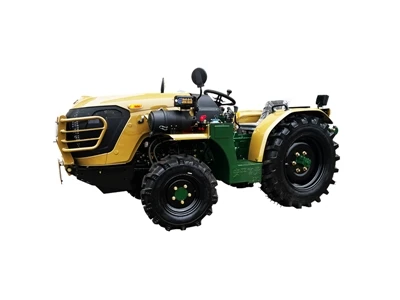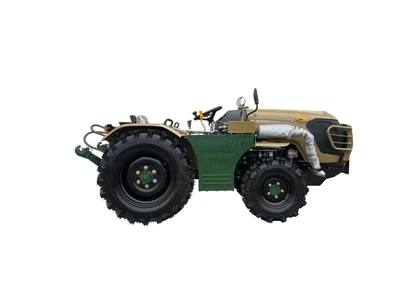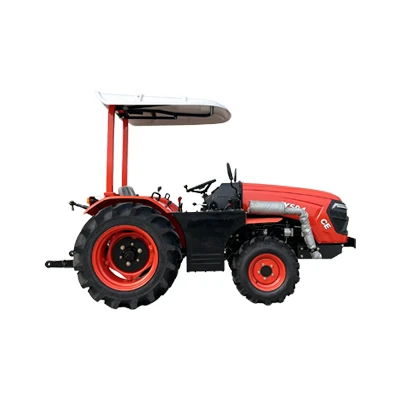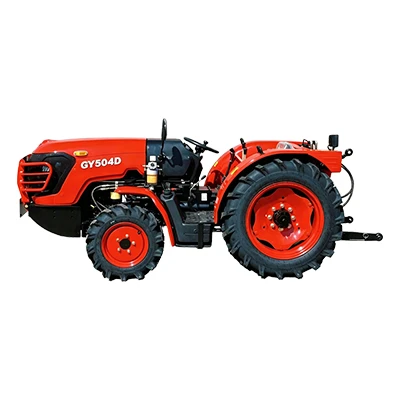
Based on tractor production and use, the main development trends are:
1. Average power continues to increase. For both agricultural and industrial tractors, average power continues to rise to improve the productivity of individual units, but the rate of growth has been declining. North America and the Soviet Union, with their small populations and large land areas, have large-scale agricultural production, primarily using large agricultural implements and correspondingly high-power tractors. In developing countries, small and medium-power tractors still predominate, but their average power is also increasing.
2. Wheeled tractors dominate agricultural tractors. Crawler tractors have largely been eliminated from agricultural production in many countries. While some crawler tractors are still in use in the Soviet Union, Italy, and China, their proportion is declining. Among industrial tractors, especially for bulldozers and excavators, crawler tractors still dominate. As tractor power increases, four-wheel-drive tractors are experiencing rapid development. The use of hydraulic steering can alleviate the steering difficulties associated with these types of tractors, and articulated steering significantly reduces the turning radius. These factors have further promoted the development of high-power four-wheel-drive tractors. To improve traction and handling performance in paddy fields, four-wheel drive variants of small and medium-power wheeled tractors have also seen rapid development in countries such as Japan.
3. Tractor safety, ease of operation, and a comfortable working environment are receiving increasing attention. Well-designed and manufactured cabs and instrumentation not only improve the driver's working conditions and ensure safety, but also enhance productivity and work quality.
4. Serialization, standardization, and standardization of tractors and their components are important measures to facilitate production and use, reduce manufacturing costs, and simplify the supply of spare parts. To meet the diverse needs of the tractor market with a relatively small number of basic tractor models, major tractor companies in Europe and the United States produce one or several product series. In countries such as the Soviet Union, a unified national tractor series spectrum was established to guide product development by each manufacturer. Developing a product series consisting of two or more basic tractor models and their corresponding variants, each with a certain degree of organic connection, maximizes the commonality of components across products, thereby increasing the production volume of common components. It also allows similar parts to be produced on the same processing line and similar components and tractors of adjacent grades to be assembled on the same assembly line. This is very beneficial for fully utilizing production capacity and reducing production costs.